
Central ducted system
Ducted heat pump installation, every Canadian province
Central air-source heat pumps tied into your existing forced-air ductwork. Modern cold-climate (CCHP) units deliver useful heat down to -30°C — well within Canadian-winter parameters.
- Independent — not an installer
- No forms, no lead selling
- Federal and provincial rebates tracked
- Cold-climate (CCHP) performance data
Typical installed cost
$12,000–$19,000
Install timeline
1–2 days
Best for
Homes with existing forced-air ductwork (natural-gas furnace homes especially)
Not ideal for
Homes without ducts (consider ductless mini-split instead) or homes with electric baseboard heating throughout
Compare installed costs for every heat pump system.
Rebates: Ontario, British Columbia, Manitoba, Nova Scotia and New Brunswick all run rebates that cover ducted cold-climate systems. The federal Greener Homes Loan and the Oil to Heat Pump Affordability program are closed; the federal National Heat Pump Rebate, due in early 2027, covers cold-climate air-source systems.
- Independent — not an installer
- No forms, no lead selling
- Federal and provincial rebates tracked
- Cold-climate (CCHP) performance data
What you get with a ducted heat pump install
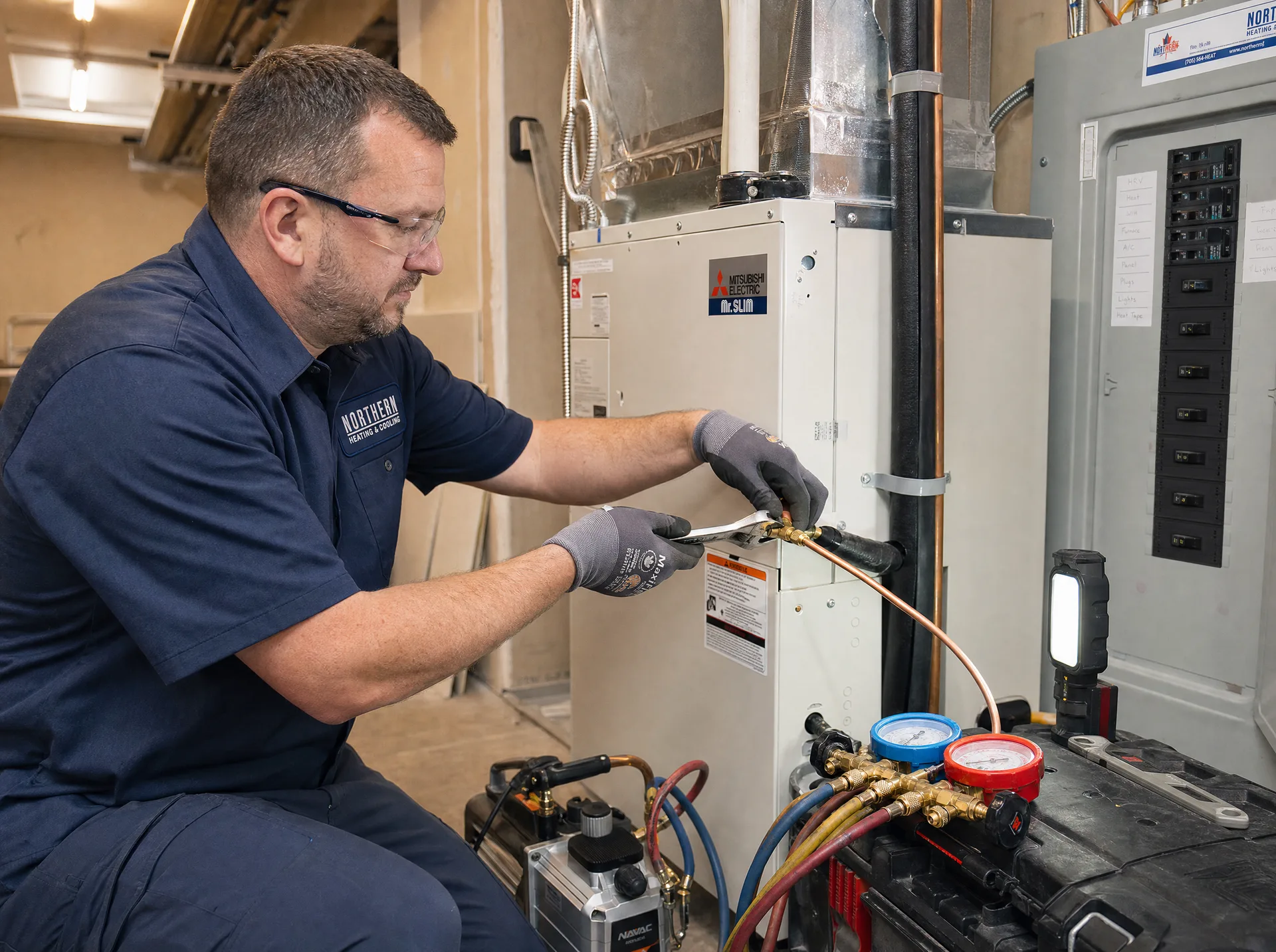
A complete ducted heat pump install replaces your existing forced-air heating with an integrated heating + cooling system. The outdoor compressor unit sits beside your home; the indoor air handler ties into your existing ductwork and air filter. You get one thermostat controlling both heating and cooling, eliminating your AC condenser entirely.
For natural-gas homes, installers typically configure the heat pump as the primary system with the existing furnace as backup for sub-zero days (a "dual-fuel" setup). This is the most cost-effective configuration in Ontario and the Prairies — the heat pump handles 80-90% of the heating hours, and the furnace covers the coldest nights.
For all-electric or oil-conversion homes, a cold-climate heat pump (CCHP) with an HSPF rating of 10+ handles 100% of the heating year-round.
Cold-climate certification — what matters in Canada
Not all heat pumps perform in Canadian winters. The standard you want is ENERGY STAR cold-climate certification combined with an HSPF rating of 10 or higher. This means the unit:
- Maintains 70%+ of its rated heating capacity at -15°C - Continues to deliver useful heat down to -25°C or -30°C (the rated minimum operating temperature) - Uses variable-speed inverter technology to modulate output instead of cycling on/off
Brands shipping certified cold-climate ducted heat pumps in Canada include Mitsubishi (Hyper-Heating), Carrier (Infinity), Bryant (Evolution), Trane (XV20i), Lennox (XP25), and Daikin (Aurora). Your installer will recommend a specific model based on your home's heating load — don't fixate on brand, look for cold-climate certification first.
Sizing matters — and it's where bad installers cut corners
Heat pump sizing in Canada requires a proper Manual J load calculation. Oversized systems cycle on/off, don't dehumidify well in summer, and wear out faster. Undersized systems can't keep up on the coldest days and force you back onto auxiliary heat.
A good installer will spend 30-60 minutes inspecting your home: insulation levels, window quality, square footage per zone, current furnace BTU rating, and electrical service capacity. Then they'll recommend a size in BTUs (typically 24,000-60,000 for residential ducted) with a clear explanation of why.
If a quote comes back without a sizing rationale, that's a red flag.
Find a qualified installer
This site is an independent guide. It does not sell or install heat pumps and does not provide quotes. The programs and directories below are where to find registered contractors and the rebate rules that apply in each province.
- National Heat Pump Rebate (Government of Canada)
The new federal rebate announced in October 2026: up to $10,000 below the median income and $2,000 for others, opening in early 2027. The official page has a sign-up for launch updates.
- Canada Greener Homes Affordability Program (NRCan)
No-cost heat pump and insulation retrofits for low- and median-income homeowners and tenants, applied for through the provincial partner. The federal Greener Homes Loan and Oil to Heat Pump Affordability program are closed.
- HRAI contractor directory
The Heating, Refrigeration and Air Conditioning Institute of Canada lists member HVAC contractors by region.
- Home Renovation Savings — Ontario
Ontario's rebate for cold-climate and ground-source heat pumps, paid per ton, and its qualified-product rules.
- Home Renovation Rebate — British Columbia
The BC Hydro and CleanBC rebate for heat pumps that replace electric heat, and the program rules that go with it.
- Efficiency Manitoba
Manitoba rebates for ducted and ductless cold-climate heat pumps.
- Efficiency Nova Scotia
Nova Scotia rebate programs and the approved-installer requirements that go with them.
Common questions
Can I install a ducted heat pump if I currently have a furnace?
Yes — this is the most common Canadian retrofit. The heat pump's indoor unit ties into your existing ductwork, and your furnace either gets removed (electric homes) or kept as backup for sub-zero days (dual-fuel configuration for natural-gas homes).
Will a ducted heat pump cool my home in summer?
Yes — that's the major bonus. A heat pump is essentially a high-efficiency AC that can run in reverse. You get heating AND cooling from one system, often eliminating your existing AC condenser entirely.
Do I need to upgrade my electrical service?
Sometimes. Ducted heat pumps draw 30-60 amps depending on capacity. If your home has 100A service and a high existing load, you may need an upgrade to 200A. This adds $2,000-$4,000 if required. Your installer will check during the quote visit.
How does pricing compare across provinces?
Installed cost runs $12,000–$19,000 nationally for a cold-climate ducted system in a 2,000–2,500 sq ft home; home size, ductwork condition and electrical capacity move it. Provincial rebates range from none in Alberta, Saskatchewan and Prince Edward Island to $7,500 in Ontario for a home not heated by natural gas.