
Whole-home ductless
Multi-zone ductless heat pump systems
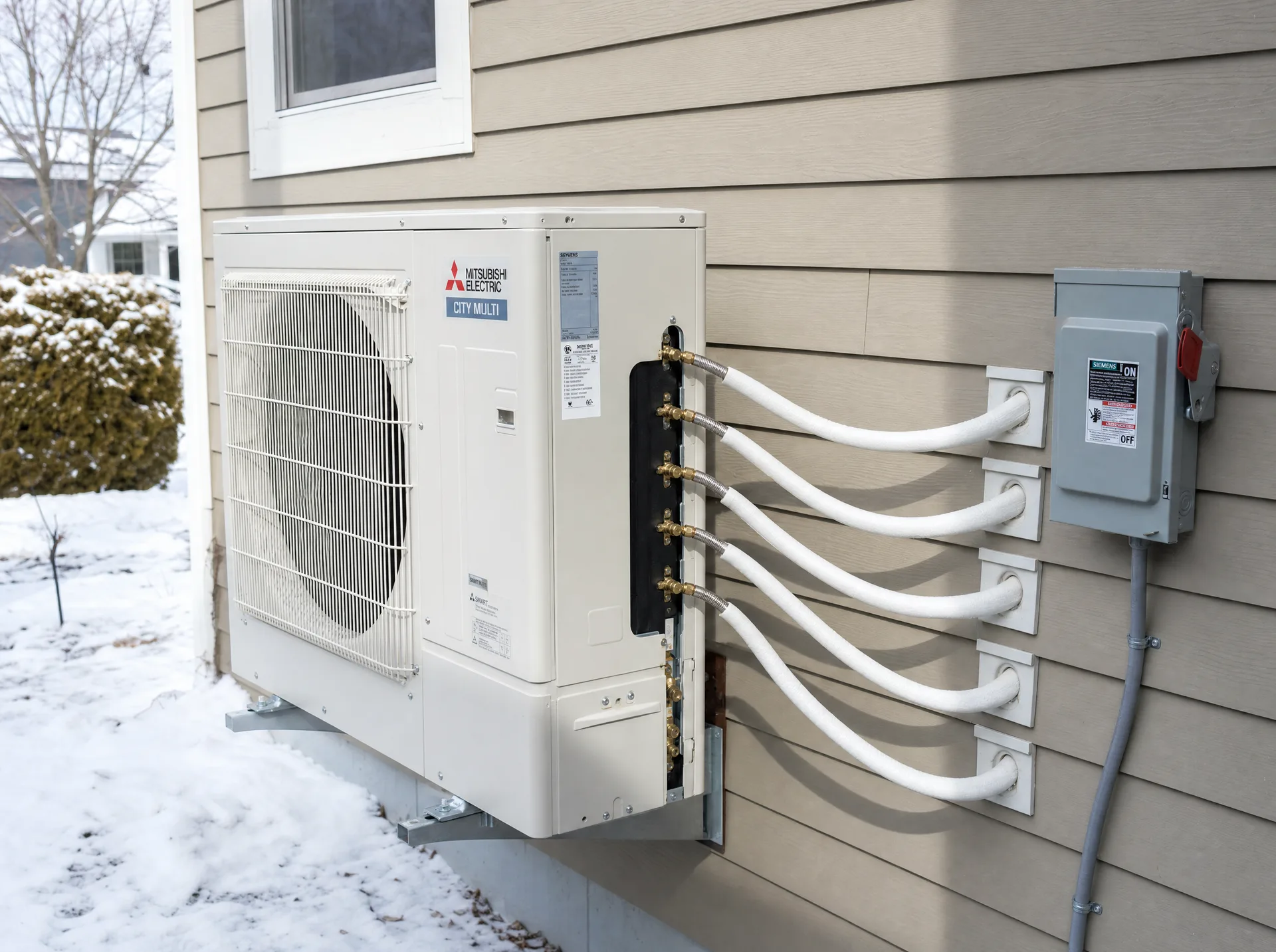
One outdoor compressor serving 2 to 8 indoor heads — independent thermostat control in every room. Whole-home heating and cooling without any ductwork.
- Independent — not an installer
- No forms, no lead selling
- Federal and provincial rebates tracked
- Cold-climate (CCHP) performance data
Typical installed cost
$8,000–$15,000
Install timeline
2–3 days
Best for
Whole-home coverage in homes without ducts, larger renos/additions, or homes where individual rooms have very different heating/cooling needs
Not ideal for
Small homes or single-zone needs (a single-head mini-split costs $4,000 less and does the same job)
Compare installed costs for every heat pump system.
Rebates: Multi-zone systems are more likely to meet the whole-home requirement some provincial rebates set. New Brunswick pays per indoor head; Nova Scotia pays per ton of added capacity.
- Independent — not an installer
- No forms, no lead selling
- Federal and provincial rebates tracked
- Cold-climate (CCHP) performance data
How multi-zone differs from single-zone
A single-zone ductless mini-split has one outdoor unit and one indoor head — it conditions one room. A multi-zone system has one larger outdoor unit ("multi-port") connected to 2 to 8 indoor heads, each independently controlled.
The advantage: you only pay for one outdoor unit and one set of refrigerant lines to the exterior. The indoor heads can be different sizes (one big head for the living room, smaller heads for bedrooms), giving you flexibility on a per-room basis.
The cost math: a 4-head multi-zone system typically runs $10,000-$12,000 installed. Buying four separate single-zone systems would cost $14,000-$24,000. Multi-zone wins on price for any home that needs 3+ zones.
Zone planning — where the design matters
Multi-zone planning is where good installers separate themselves from cheap ones. A poorly designed zone layout means you're heating rooms you don't use, or you can't adequately heat the spaces that matter.
Standard zone breakdown for a Canadian 3-bedroom home:
- Zone 1: Open-plan main floor (living + kitchen + dining) — larger indoor head, 12,000-18,000 BTU - Zone 2: Primary bedroom — 9,000-12,000 BTU head - Zone 3: Secondary bedroom(s) — 6,000-9,000 BTU each - Zone 4: Basement or finished bonus room (optional)
A skilled installer adjusts these based on your home's actual layout, room orientations (south-facing rooms run hotter in summer), and how each room is used.
Why multi-zone unlocks the best rebates
Most Canadian rebate programs require the heat pump to qualify as the "primary heating system" to earn the highest rebate tier. A single ductless head heating one bedroom doesn't qualify; a multi-zone system covering the whole home does.
Nova Scotia pays per ton of newly added capacity and New Brunswick pays per indoor head, so system design changes the rebate directly.
Your installer should confirm in writing that the proposed multi-zone system meets the rebate-tier requirements before you sign off.
Find a qualified installer
This site is an independent guide. It does not sell or install heat pumps and does not provide quotes. The programs and directories below are where to find registered contractors and the rebate rules that apply in each province.
- National Heat Pump Rebate (Government of Canada)
The new federal rebate announced in October 2026: up to $10,000 below the median income and $2,000 for others, opening in early 2027. The official page has a sign-up for launch updates.
- Canada Greener Homes Affordability Program (NRCan)
No-cost heat pump and insulation retrofits for low- and median-income homeowners and tenants, applied for through the provincial partner. The federal Greener Homes Loan and Oil to Heat Pump Affordability program are closed.
- HRAI contractor directory
The Heating, Refrigeration and Air Conditioning Institute of Canada lists member HVAC contractors by region.
- Home Renovation Savings — Ontario
Ontario's rebate for cold-climate and ground-source heat pumps, paid per ton, and its qualified-product rules.
- Home Renovation Rebate — British Columbia
The BC Hydro and CleanBC rebate for heat pumps that replace electric heat, and the program rules that go with it.
- Efficiency Manitoba
Manitoba rebates for ducted and ductless cold-climate heat pumps.
- Efficiency Nova Scotia
Nova Scotia rebate programs and the approved-installer requirements that go with them.
Common questions
How many heads can one outdoor unit support?
Residential multi-port outdoor units support 2 to 8 indoor heads depending on model and total capacity. Most Canadian homes use 3-5 head systems. Beyond 6 heads you're usually better off with two smaller multi-zone systems for redundancy.
Can different rooms heat and cool simultaneously?
Not on the same multi-zone outdoor unit at the same time — the system is either in heating or cooling mode for all connected heads. If you genuinely need one room cooling while another heats (rare in residential), you'd need two separate outdoor units. For practical Canadian use, the system can be heating in the morning and switch to cooling in the afternoon as needed.
What happens if one indoor head breaks?
The other heads keep working. Most warranties cover indoor heads independently. Repair cost on a single head is usually $400-$800 (compressor issues are rare; control board or fan motor are the most common failures).